


Leaks and moisture in outdoor areas such as patios, gardens, or terraces are one of the most common problems in homes. Over time, water seeps in through joints, cracks, or poorly sealed areas, causing moisture, stains, peeling finishes, and even structural damage. Identifying the source and taking action with the appropriate waterproofing solutions is essential to keeping these spaces protected and in perfect condition.
Table of Contents
How do leaks and moisture problems develop and appear in patios, gardens, or terraces?
It will be essential to understand where leaks and moisture originate in order to choose the right system to stop them.
H3 Dampness and Rainwater Leaks
One of the main causes is rainwater. If it isn’t drained properly, the water will always find the weakest spot to seep through.
You can usually find leaks and water damage in various areas or spots throughout a home:
- Terrace or patio flooring that is poorly sealed or has deteriorated joints
- Joints between walls and the floor, where stresses and microcracks are concentrated
- Patio or terrace drains with defective seals or inadequate drainage, and areas with insufficient drainage where water pools and eventually seeps into the joints.
- Poorly waterproofed planters that allow water to accumulate at the bottom
- Walls that lack vertical waterproofing and result in rainwater seeping into the walls.
When these areas aren’t properly treated, water seeps in through capillary action and spreads to lower levels. Learn more in our article on what capillary moisture is.
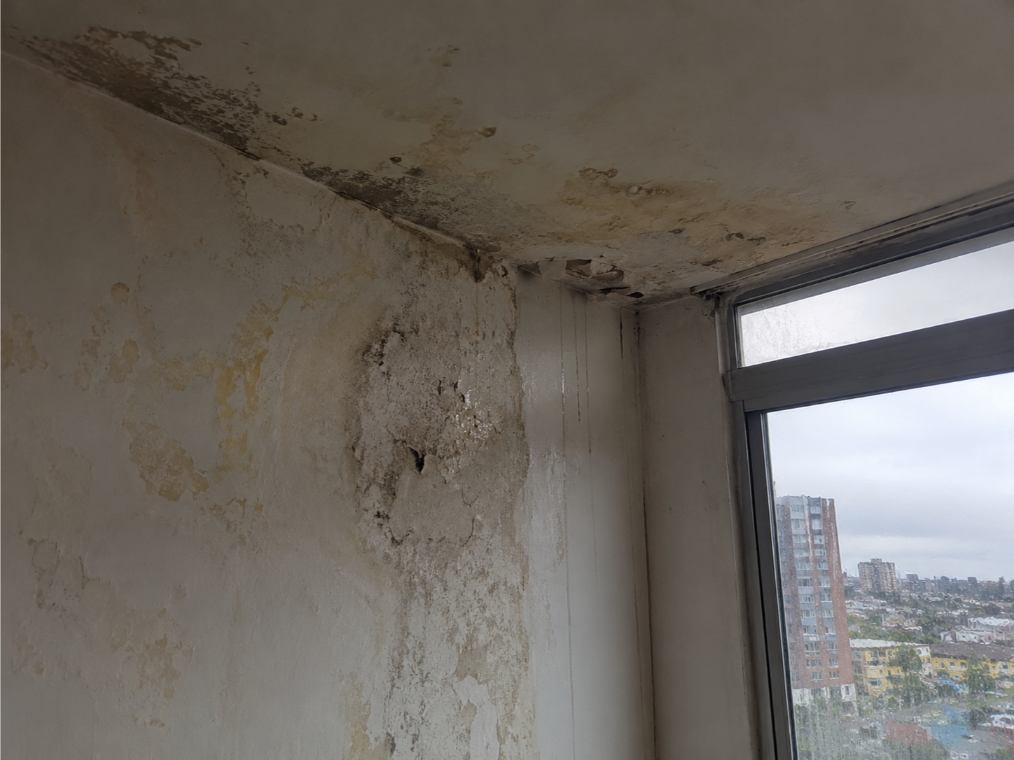
Visible Signs of Rainwater Leakage | Structural and Functional Consequences |
● Black patches of moisture or mold in corners, on walls, and in joints. These dark spots are colonies of fungi that thrive in damp environments. ● Detachment of ceramic tile or grout: Water seepage causes the adhesives to lose their bond ● White efflorescence or salt deposits when water dissolved within the structure evaporates, leaving salts on the surface ● Peeling or flaking paint ● Smell of dampness | ● Deterioration of the waterproofing ● Corrosion of existing metal components such as gratings, structural members, handrails, or anchors ● Rainwater seeping into the walls of the home ● Water leaks in existing basements ● Material wear caused by cycles of moisture and drying over time ● Risk of frost damage in the winter: Water inside the pavement or walls may freeze, expand, and cause additional cracks ● Rainwater seepage into foundations ● In landscaped areas, root rot and loss of nutrients from the growing medium
|
Other Causes of Leaks and Moisture Problems in Outdoor Areas
Although rainwater is the most common cause, there are other factors that can lead to moisture outdoors:
- Overwatering or leaks from planters or irrigation systems: Water can seep into landscaped areas with planters.
- Condensation caused by temperature differences, especially in enclosed or partially enclosed areas.
- Leaks in water or drainage systems: leaks in buried pipes, outdoor faucets, and outdoor showers that can cause moisture even when it isn’t raining.
- Capillary action from the ground: groundwater rises by capillary action.
- Poor drainage or improper slopes in the pavement.
Products for sealing water leaks and preventing moisture damage
There is a wide variety of products available to combat and prevent damage caused by rainwater seepage and moisture in patios, gardens, or terraces.
Water Drainage and Sinks: The First Line of Defense
Proper water drainage is key to preventing water from accumulating and eventually seeping through. A good drainage system combines well-designed slopes with high-quality drains.
There are different types of deck drains that ensure complete watertightness thanks to the inclusion of waterproofing membranes:
- PVC patio or deck drain grates, such as the W-S Deck Kit
- Steel drain grate , such as the W-S Terrace Plus Kit
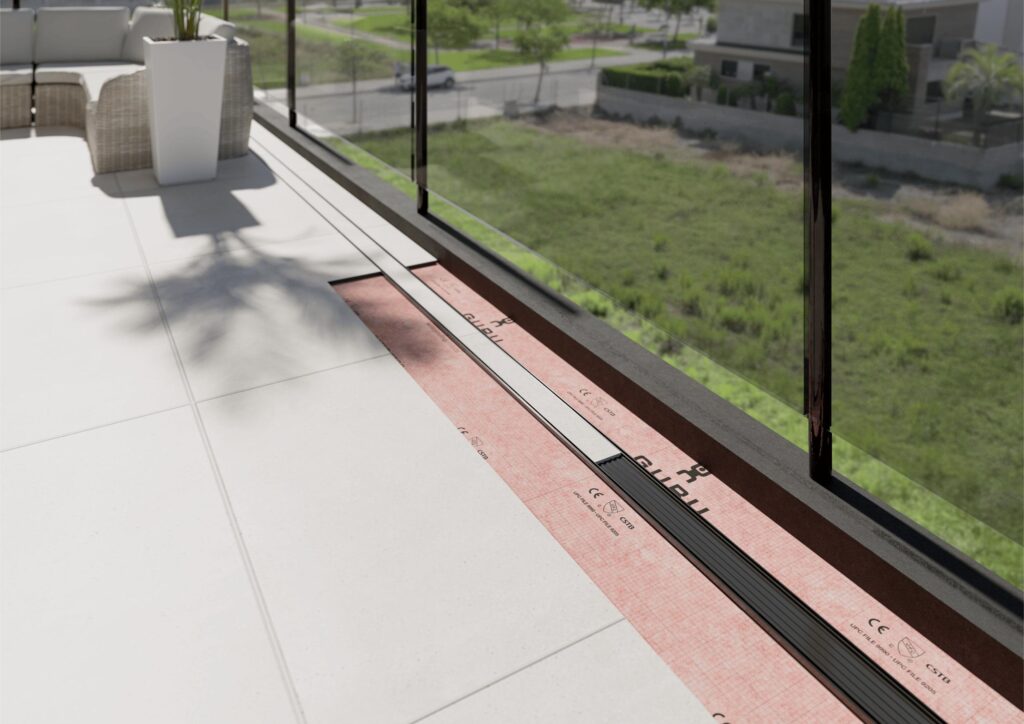
For those looking for patio drains with a modern aesthetic, the Raynex gutter is a highly recommended solution because it’s a concealed linear drain for patios or terraces. These concealed drains are especially popular in patios or gardens with swimming pools. If you’re also interested in waterproofing this area, we recommend reading the post on pool waterproofing on our blog.
Waterproofing Patio and Garden Floors
For waterproofing patio and garden floors, there are flexible waterproofing membranes that can be installed under tiles or ceramic cladding. Installing them seals seams, joints, and utility penetrations, preventing leaks and moisture damage.
The Water-STOP membrane has unique strength and elasticity that allow it to withstand structural movements and thermal changes without breaking, and it can be combined with flexible corner strips to create a waterproofing system that is 100% watertight.
Waterproofing Planters in Patios and Gardens
This waterproofing fabric is particularly useful for waterproofing planters that are attached to walls, in contact with walls, or in contact with the ground. This prevents moisture from spreading to adjacent areas.
Patio and Garden Renovations to Prevent Leaks and Dampness
Preventing water damage also starts with the installation of other features in your patio or garden. After all, these areas often include outdoor showers as well. If you want to install a prefabricated flush-mounted shower pan, make sure to choose one that includes all the necessary components to prevent leaks and moisture buildup.
In addition, for those who want to enjoy life in their gardens and patios and love hosting family and social barbecues, there are also solutions in the form of prefabricated sinks—an essential element for cleaning up after social gatherings, without having to go inside the house and with a full waterproofing guarantee.

Conclusion: How to Prevent Water Leaks in Outdoor Areas Such as Gardens, Patios, or Terraces
The best waterproofing and drainage systems are designed to make your home’s outdoor spaces modern, functional, and durable. Prevent damage from leaks and moisture by using the right products. And if a problem has already arisen, with GURU, it’s never too late to fix it.
FAQs on How to Prevent Leaks and Dampness
Las causas más frecuentes son las juntas deterioradas, las grietas del pavimento, los encuentros mal sellados entre suelo y pared, las pendientes incorrectas, los sumideros defectuosos y la falta de impermeabilización en terrazas, patios, jardines o jardineras. También pueden deberse a fugas de riego, tuberías dañadas o humedad por capilaridad.
Las filtraciones de agua de lluvia suelen empeorar después de episodios de lluvia y aparecen como manchas oscuras, moho, salitre, pintura desconchada, juntas degradadas o revestimientos desprendidos. También pueden manifestarse en techos, sótanos o paredes situadas bajo una terraza o patio.
La solución debe combinar una correcta evacuación del agua con una impermeabilización continua. Es necesario revisar pendientes, juntas y sumideros, reparar los puntos dañados e instalar una lámina impermeabilizante bajo el pavimento. Water-Stop de GURU permite proteger el suelo, los encuentros y los puntos singulares frente a nuevas filtraciones.
Una de las soluciones más eficaces es instalar una lámina impermeabilizante flexible bajo el revestimiento. Water-Stop de GURU crea una barrera continua que se adapta a esquinas, juntas y cambios de plano, ayudando a evitar filtraciones y humedades provocadas por la lluvia, el riego o los movimientos del soporte.
El drenaje es la primera barrera frente a las filtraciones. Si el agua queda estancada, aumenta la presión sobre juntas, pavimentos y encuentros. Un sistema eficaz debe incluir pendientes adecuadas y sumideros para terraza o patio que evacuen rápidamente el agua y estén correctamente conectados con la impermeabilización.
La elección depende del diseño y del caudal necesario. Los sistemas W-S Kit Terrazas y W-S Kit Terraza Plus de GURU permiten combinar el desagüe con una impermeabilización segura. Para proyectos que buscan un drenaje lineal discreto, la canaleta Raynex se integra en el pavimento y facilita la recogida del agua de lluvia.
Las jardineras deben impermeabilizarse tanto en la base como en sus paredes interiores, prestando especial atención a esquinas, juntas y desagües. Una lámina impermeabilizante como Water-Stop ayuda a impedir que el agua del riego migre hacia muros, pavimentos o estancias colindantes.
En determinadas reformas es posible instalar un nuevo sistema sobre el pavimento existente, siempre que el soporte esté firme, limpio y sea compatible. Antes de actuar deben comprobarse las pendientes, el estado de las piezas y los puntos de evacuación para evitar reproducir los fallos anteriores.
La humedad puede proceder de fugas en tuberías, sistemas de riego, grifos exteriores, duchas de jardín, jardineras o agua ascendente desde el terreno. También puede aparecer condensación en zonas semicerradas. Identificar el origen es imprescindible antes de impermeabilizar o reparar el revestimiento.
Las filtraciones pueden provocar moho, salitre, desprendimiento de cerámica, corrosión de elementos metálicos, deterioro de morteros y daños en paredes, sótanos o cimientos. En zonas frías, el agua acumulada también puede congelarse, aumentar de volumen y generar nuevas grietas.
Una solución completa puede combinar láminas impermeabilizantes como Water-Stop, bandas para sellar encuentros, sumideros con impermeabilización integrada y canaletas de drenaje como Raynex. La combinación adecuada depende del soporte, la pendiente, el uso del espacio y el origen de la humedad.