

● TECHNICAL SHEETS
De-coupling membrane
G-Flex
Features that make G-Flex film different
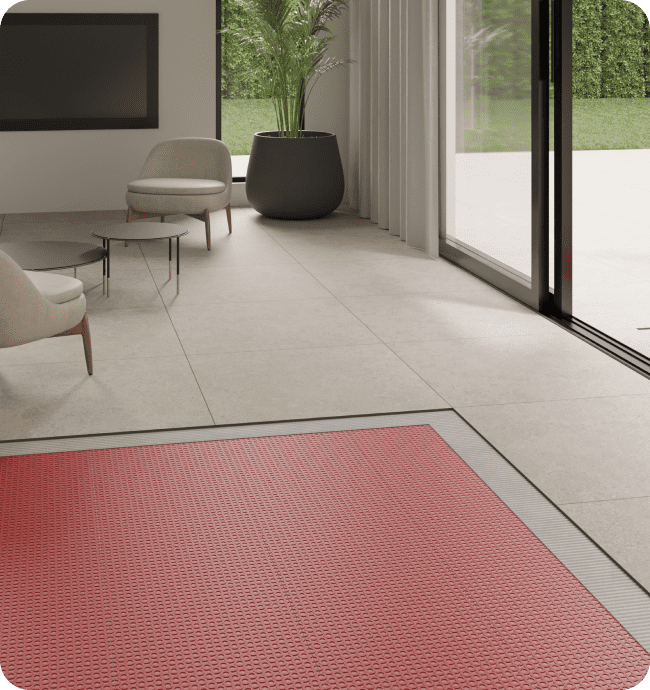
GURU’s G-FLEX uncoupling sheet is formed by ring-shaped reliefs. The reverse side of the sheet is covered by a geotextile sheet that provides a perfect grip to the C2 tile adhesive cement while allowing water vapor to pass through the ducts of the rings, thus avoiding problems with humidity that may appear in the substrate.
<span data-metadata="">100% waterproof
<span data-metadata=""><span data-metadata=""><span data-buffer="">Decoupling and
decoupling
<span data-metadata=""><span data-metadata=""><span data-buffer="">Load sharing
<span data-metadata=""><span data-metadata=""><span data-buffer="">Heat distribution
● FEATURES
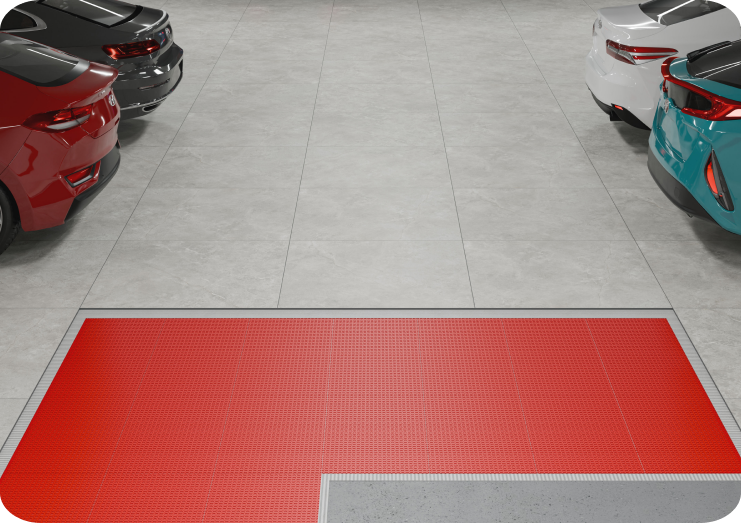
The G-Flex membrane protects the coating on large surfaces such as terraces, squares or traffic areas such as parking lots or dealerships.
Cement Glue Type C2
G-Flex® Desolidarizing Film
New Ceramic Tile
Antique Siding
● FINISHES
Uses of G-Flex® decoupling membrane
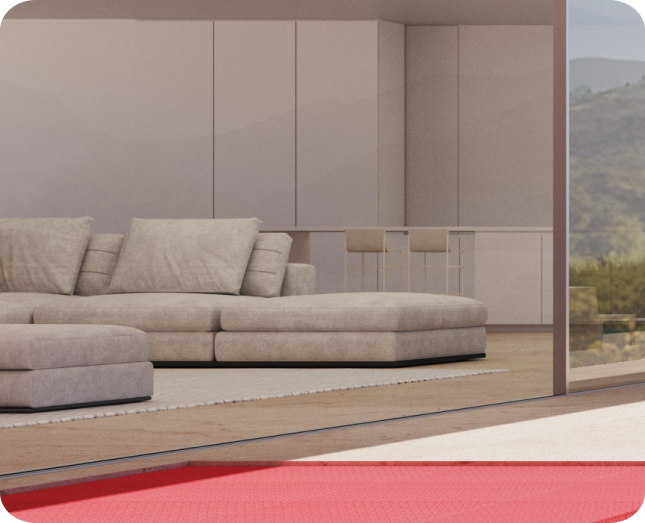
Guru’s G-FLEX sheet is a waterproofing and decoupling solution for terraces and decks with ceramic or natural stone finishes. Its anti-fracture waterproof structure helps to protect the coating against cracked substrates, substrate movement and residual moisture, improving the durability of the system in both new construction and exterior renovation.
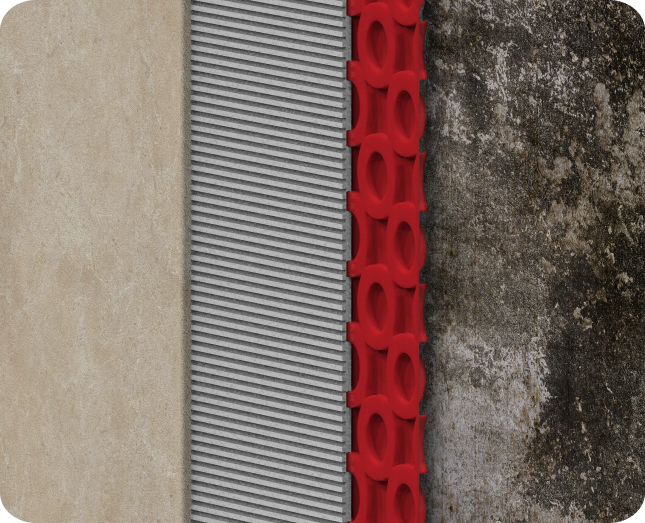
Guru’s G-FLEX is an effective option for treating negative moisture problems from the inside, creating a waterproof barrier without the need for intervention on the exterior face of the wall or floor. In addition to waterproofing, its nodular design favors vapor dissipation and helps manage residual moisture, making it especially useful in basements, crawl spaces and areas in contact with the exterior ground.
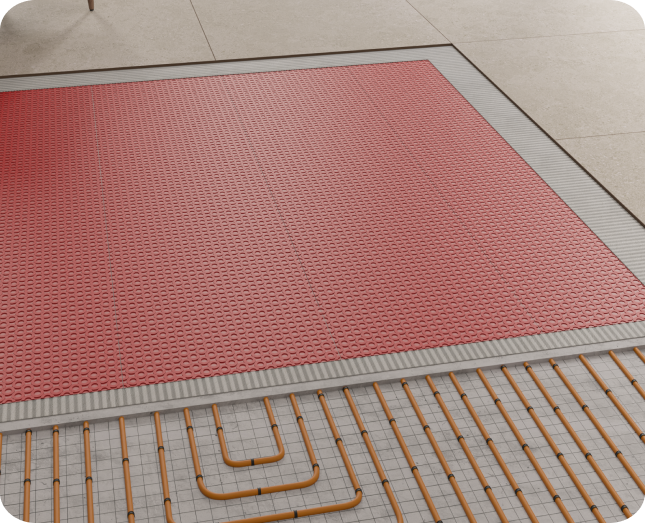
Guru’s G-FLEX sheet is designed for underfloor heating installations, where it provides waterproofing, decoupling and better heat distribution. Thanks to its nodular structure, it facilitates faster and more uniform heat transmission, while helping to absorb stresses in the substrate and protect the ceramic tile from cracking and movement.
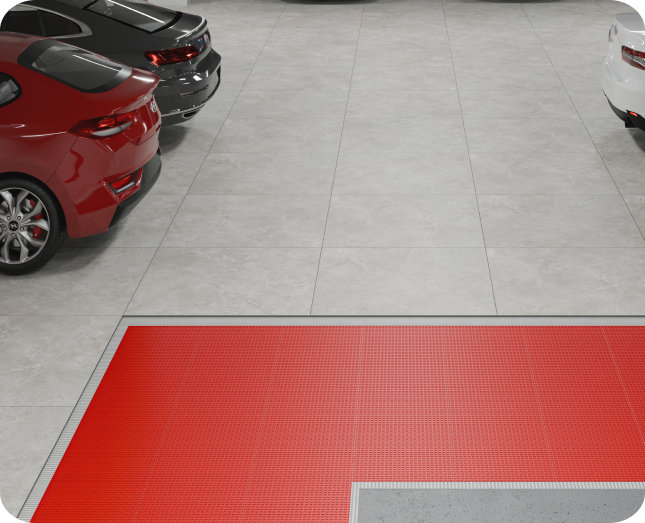
For garages with ceramic or natural stone flooring, the G-FLEX decoupling sheet provides a very interesting combination of waterproofing, decoupling and load distribution. Its system helps to transfer the loads from the coating to the substrate at multiple points, reducing stresses and improving the performance of the pavement on critical, damp substrates or those at risk of cracking. This application for garages is a reasonable inference from its technical properties of load distribution, decoupling and waterproofing.
Frequently Asked Questions
In this section we solve the most common queries about
technical specifications, performance and product compatibilities.
Our goal is to provide you with a clear and complete overview that facilitates
decision making and ensures a correct choice and implementation.
● FAQS
Technical information of the
film
desolidarizante G-FLEX
● TECHNICAL
Waterproof anti-fracture decoupling membrane for installation under ceramic or natural stone cladding, both indoors and outdoors. It serves to decouple the coating from the substrate, protect against leaks, reduce the risk of cracking due to substrate movement and help dissipate vapor and residual humidity. It is also suitable for floors with radiant heating and for critical substrates such as wood, anhydrite, mortar, existing pavement or exterior areas.
It consists of a multilayer structure composed of a 0.5 mm HDPE high-density polyethylene film, with 3 mm high nodules, and a non-woven geotextile fleece of polypropylene fibers at the base. The film provides waterproofing and the geotextile sheet favors total adherence to the substrate by means of adhesive cement. It does not contain hazardous substances.
● RELATED PRODUCTS
Installation accessories complementary
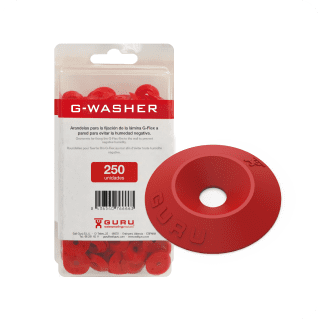
<span data-metadata=""><span data-metadata=""><span data-buffer="">G-Washer
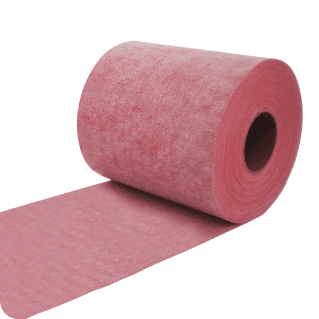
<span data-metadata=""><span data-metadata=""><span data-buffer="">W-S Band
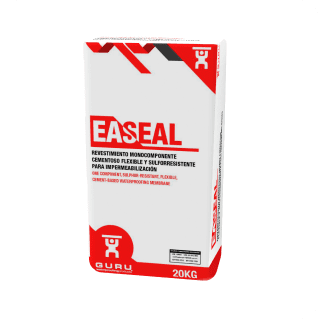
<span data-metadata=""><span data-metadata=""><span data-buffer="">Easeal
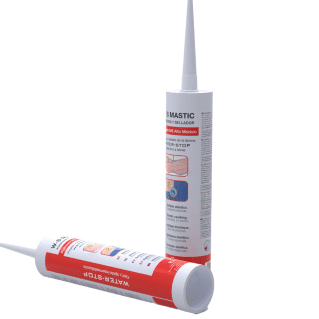
<span data-metadata=""><span data-metadata=""><span data-buffer="">W-S Mastic