


Dampness in homes or buildings is not only capable of damaging walls and ceilings, but also affects the health and comfort of people and the structure of the building. They can have different types of origin: from external filtrations to condensation or problems in the foundations and that is why each type requires specific solutions. Correctly detecting the types of dampness is the first step to apply an effective treatment, avoid their reappearance and prevent further damage.
Table of Contents
What types of dampness are there?
Moisture in buildings and homes is one of the most common problems that affects both the aesthetics and the health of spaces. Not all dampness is the same: it has different causes and requires specific solutions. Knowing the types of dampness is the first step to identify them correctly and apply the appropriate treatment.
- accidental
- by capillarity
- condensation
- filtration
Accidental humidity
If you suffer from accidental dampness that has appeared suddenly, it is likely to be caused by breaks or leaks in ducts or pipes (supply or drainage).
How to identify them: these are circumscribed stains that worsen if you use a faucet or appear after rain. They can also be leaks in roofs or under fixtures.
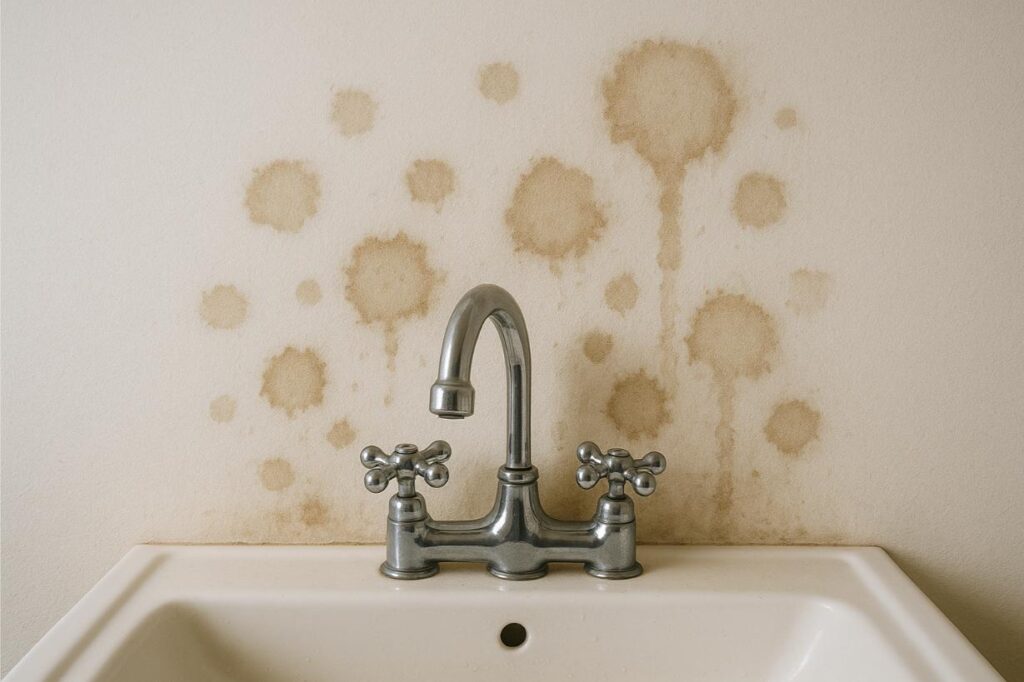
Treatment: The best way to deal with these dampnesses is to locate and repair the damaged duct. Duct reinforcements can be applied to seal pipe penetrations or joints such as W-S Mastic, EASEAL, W-S Passtu or SAFETUB.
Moisture due to seepage
On the other hand, dampness due to seepage occurs when: there is seepage due to rain, adjacent raft, poorly waterproofed areas, worn showers, end of life of the waterproofing, etc … penetrates through walls, terraces or cracks.
How to detect them: these types of dampness appear as extensive stains, drips and soaked areas on walls. They can also cause damage to walls, joints or adjoining areas.
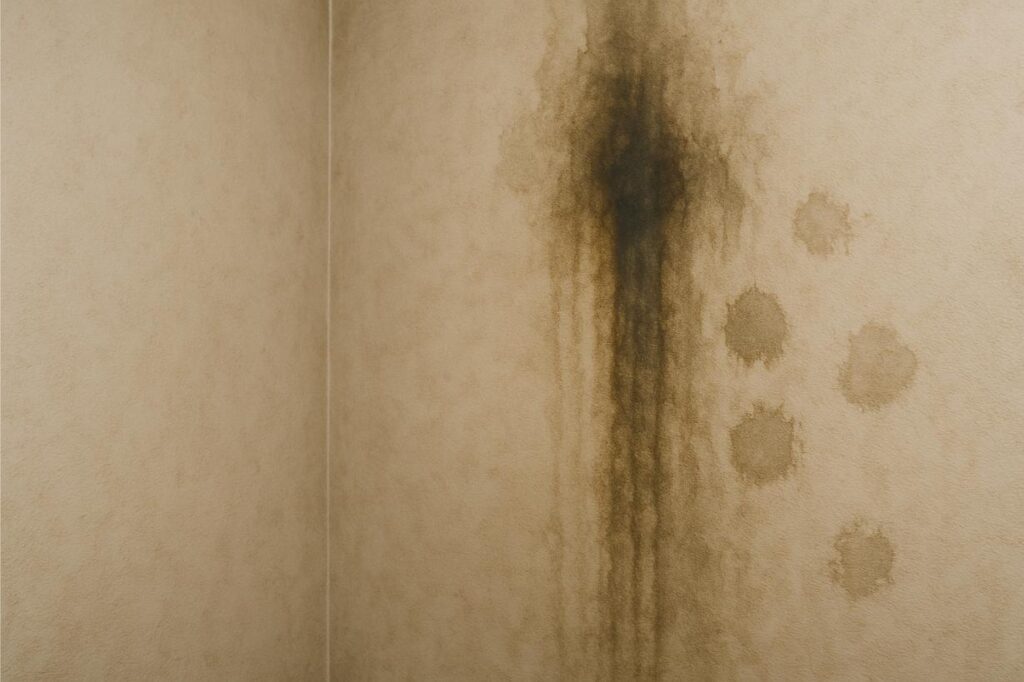
Solution: In this case, the best option is to identify the point of entry and seal it (it is possible that it is a crack, joints or expansion joints). Then, proceed to waterproofing with membrane, ensuring a useful life subject to the structure itself.
WaterStop or G-Flex waterproofing membranes are the ideal solution to seepage dampness and can be installed on roofs, terraces, balconies or swimming pools. They can be applied in both new projects and renovations. These two membranes are distinguished by:
|
Feature |
G-FLEX ✅ |
WATER-STOP ⚠️ |
|
Can be applied wet |
✔ Yes |
✘ No |
|
New construction and rehabilitation |
✔ Yes |
✔ Yes |
|
Fast installation / no waiting time |
✔ Yes |
✘ No (adhesive required) |
|
Dissipates residual moisture from the substrate |
✔ Yes |
⚠️ Partially |
|
High elasticity and structural movement |
✔ High |
⚠️ Media |
Rising or negative pressure humidity
When water rises through the capillaries of walls or foundations generating stains on the lower surface of the walls, rising damp is produced.
Identification: In these cases the dampness rises from the floor or walls producing stains between 20 and 100 cm from the floor, sometimes also accompanied by saltpeter. If this wall is painted or coated, you may find that the paint or coating is chipped or swollen. If you want more information about rising damp see our previous post where we explain it: https://www.estilguru.com/que-es-la-humedad-por-capilaridad-y-como-solucionarla/
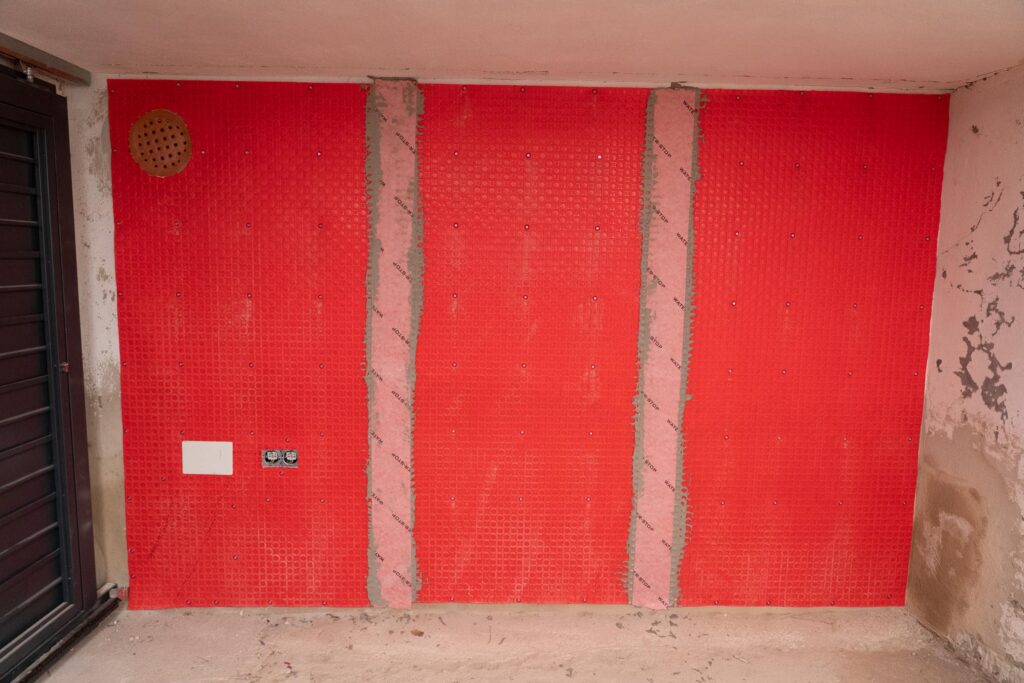
Treatment: the deteriorated coating must be removed up to 1 meter in height, cleaned and sanitized of mineral salts. The next step is to apply chemical injections of gel or hydrophobic resin and seal the pores, although it is also common to apply physical barriers.
The most common physical barriers are building panels or nonwoven sheets such as G-FLEX, which dissipate moisture from the building into the air, making it ideal for basements, garages and dampness rising from the subsoil or walls adjoining the ground created by the high water table. Among the advantages of using a G-Flex membrane
is the reduction of construction time, since the installation and placement of the coating can be done immediately. Its moisture dissipation capacity, thanks to its network of internal channels, makes it a perfect product in rainy areas and it can be applied directly on wet surfaces, as we have seen in the previous graph.
Finally, the appropriate coating can be applied to finish the floor or wall.
Condensation humidity
Condensation is a type of humidity that occurs when water vapor comes into contact with cold surfaces. This is why it is commonly found in kitchens, bathrooms and poorly ventilated areas.
It arises: in the form of droplets, mold on ceilings, windows or corners. In addition, if you can observe this phenomenon, you will notice a musty smell or you will see black fungal spots.
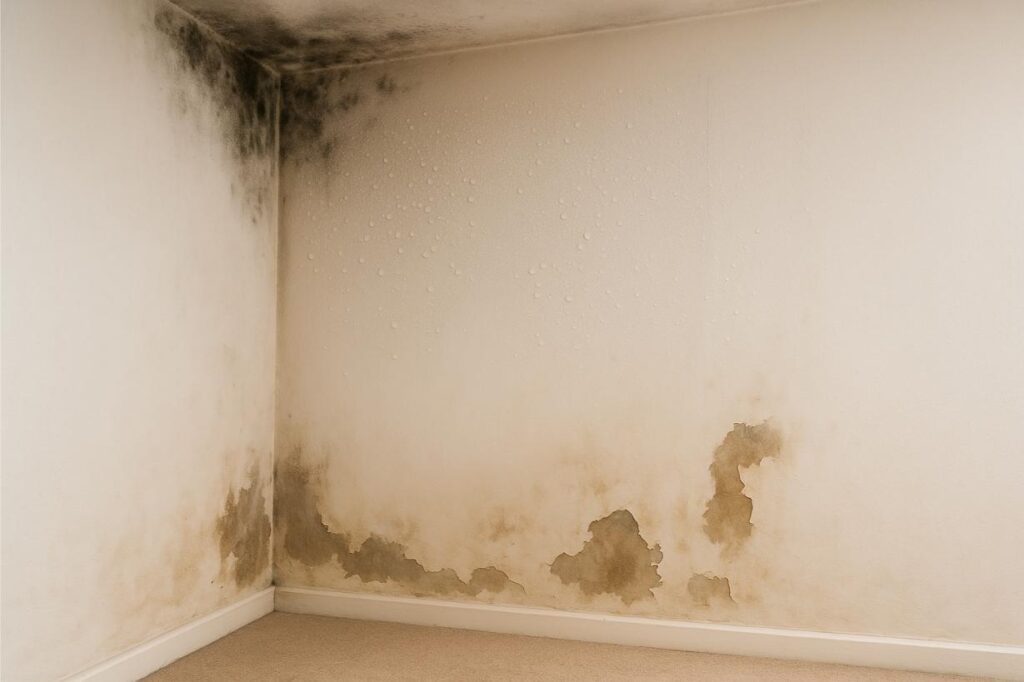
Treatment: in these cases it is always advisable to improve ventilation and even install dehumidifiers. Another important step is to insulate walls, doors or windows. And treat with anti-mold paint and anti-condensation plaster if necessary.