

Disadvantages of Waterproofing Mortar
The disadvantages of waterproofing mortar mean that, although it is an economical option, it is not always the best solution for waterproofing swimming pools, terraces or exteriors and preventing water seepage. This mixture, developed for use in construction, has limitations that should be considered when planning long-term waterproofing projects.
Table of Contents
What is waterproofing mortar and what is it used for?
Floor waterproofing mortar is a mixture of cement, sand and chemical additives that creates a barrier against various types of moisture when applied to concrete or masonry surfaces. Its main function is to protect structures from water and seepage damage, preventing mold, corrosion and deterioration of materials.
Its main components are:
|
Cement |
Provides the waterproofing mortar with resistance and durability. |
|
Fine sand |
Improves the adhesion and workability of the mixture. |
|
Waterproofing additives |
Reduces porosity and increases water resistance |
|
Resins and polymers |
Improve adhesion and flexibility in state-of-the-art mortars |
What types of waterproofing mortar are there and what are their applications?
There are three types of waterproofing mortar according to their base:
|
Cementitia |
Mixture of Porland cement, fine sand and waterproofing additives. |
Ideal for concrete, mortar and masonry structures |
May crack with structural movements or temperature changes |
|
Acrylic |
Blending of cement or resins with acrylic polymers |
For porous surfaces such as stucco, brick, old concrete or ceramics |
More expensive than the previous one and requires more care in preparation |
|
Polyurethane |
Polyurethane resins, optional cement and waterproofing admixtures |
For surfaces exposed to abrasion or structural movements |
Higher cost and requires specialized applicators and well-prepared surfaces |
Waterproofing mortar differs from other types of mortar, such as water-repellent mortar, because it blocks the passage of water. Water-repellent mortar, on the other hand, only repels moisture, but does not resist water seepage. water filtration or constant pressure.
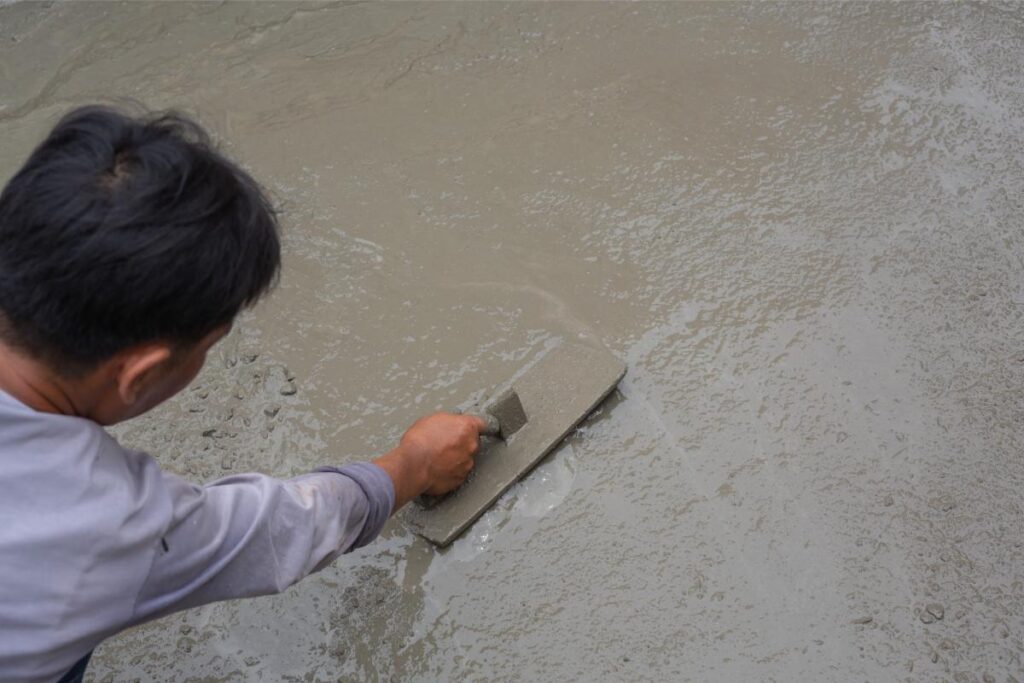
What are the disadvantages of waterproofing mortar?
Thus, although we find a low-cost product that is adaptable to some specific substrates such as concrete, brick and masonry, there are several drawbacks to waterproofing with waterproofing mortar.
- Limited durability: as with chlorinated rubber waterproofing (insert blog article link when posting) it cracks over time, especially in seasons with temperature and humidity changes. It is especially problematic in corners and baseboards.
- It requires dry surfaces to be applied, which creates a longer installation time. If it rains, it is necessary to remove the product and start again with a dry substrate.
- Several layers (up to 4) and sometimes reinforcing mesh are used. As a consequence, its installation is more complex than other waterproofing solutions.
- It requires frequent maintenance and periodic repairs.
What are the alternatives to waterproofing mortar?
As waterproofing mortar has limited uses, it is not always the best option for waterproofing swimming pools, terraces or exteriors. As it is a rigid mixture, waterproofing in these places suffers thermal movements, expansions and contractions, which cause cracks in the layer and generate filtrations. Likewise, contact with pool water or rainwater outdoors deteriorates the film.
The best option to replace pool waterproofing mortar or exterior waterproofing mortar are quality sheets such as Waterstop from GURU.
It is a waterproofing membrane that, in addition to offering a much longer useful life than mortar (more than 50 years), resists constant exposure to water, rain and UV rays.

In addition, its application in corners and joints is perfect, and guarantees the best waterproofing against structural movements and on irregular surfaces.
Other advantages of using a waterproofing membrane are that it does not require the surface to be completely dry, which reduces construction time, avoids failures due to residual moisture and guarantees faster installation with minimal maintenance.
|
Feature |
Waterproofing Mortar |
GURU Waterproofing Sheets |
|
Durability |
Limited; cracks over time and requires frequent repairs |
Very high; service life of more than 50 years without maintenance |
|
Flexibility |
Low; does not absorb structural movement and expansion |
High; adapts to movements, corners and irregular surfaces |
|
Application |
Requires several coats, reinforcement meshes and completely dry surface. |
Quick and easy; no dry surface required and fits any geometry |
|
Water resistance |
Suitable for point contact; failure under constant water pressure or leaks |
Excellent; resistant to constant contact with water, rain and pools |
|
Resistance to pedestrian traffic |
Low, accelerates surface deterioration with cracking and wear |
Designed to withstand constant pedestrian traffic (e.g. waterproofing of walkable terraces, add link to blog post) and vehicle traffic in basements. |
|
Maintenance |
Frequent; repainting or repairs every few years |
Minimal; one-time installation with almost zero maintenance |
|
Compatibility with substrates |
Concrete, brick, masonry |
Extensive; concrete, ceramic, existing surfaces |
|
Sustainability |
Low; waste difficult to recycle |
High; recyclable and more environmentally friendly materials |
|
Initial cost |
Under |
Medium-high, but lower total cost in the long term due to durability |
What is the best option to replace waterproofing mortar?
If you are looking for effective, durable and uncomplicated waterproofing, a waterproofing sheet for swimming pools, terraces and exteriors is the professional and specialized solution that avoids all the inconveniences of waterproofing mortar, especially in these places where climate or water are critical factors.
Preguntas frecuentes sobre el mortero impermeabilizante
¿Qué es exactamente el mortero impermeabilizante?
El mortero impermeabilizante es una mezcla de cemento, arena y aditivos químicos diseñada para crear una barrera contra la humedad en superficies de hormigón, ladrillo y mampostería. Su función es reducir filtraciones y proteger las estructuras frente al agua.
¿Para qué sirve el mortero impermeabilizante en construcción?
Se usa para impermeabilizar muros, cimentaciones, piscinas, depósitos y zonas expuestas a humedad moderada. Ayuda a prevenir moho, corrosión y deterioro estructural.
¿Qué tipos de mortero impermeabilizante existen?
Existen morteros impermeabilizantes cementicios, acrílicos y de poliuretano. Cada uno ofrece niveles distintos de flexibilidad, adherencia y resistencia, aunque todos comparten la limitación de comportarse como recubrimientos rígidos.
¿Cuáles son los principales inconvenientes del mortero impermeabilizante?
Su principal desventaja es la durabilidad limitada. Con el tiempo se agrieta debido a cambios térmicos, humedad y movimientos estructurales. Requiere soportes totalmente secos, varias capas, mallas de refuerzo y mantenimiento frecuente.
¿El mortero impermeabilizante es adecuado para piscinas o terrazas?
No siempre. Al ser rígido, no soporta bien las dilataciones ni el contacto prolongado con el agua, lo que provoca fisuras y filtraciones. Es habitual que falle en esquinas y rodapiés.
¿Por qué el mortero impermeabilizante se agrieta con el tiempo?
Porque no tiene elasticidad suficiente para absorber movimientos estructurales y cambios de temperatura. Cuando la superficie se contrae o dilata, la capa de mortero no puede acompañar ese movimiento.
¿Requiere el mortero impermeabilizante que la superficie esté completamente seca?
Sí. Si se aplica con humedad, se generan fallos prematuros, desprendimientos y pérdida de adherencia. Esto alarga los tiempos de obra y obliga a repetir la aplicación si llueve.
¿Se puede aplicar otro sistema de impermeabilización encima del mortero impermeabilizante?
No siempre. Muchos sistemas requieren eliminar primero el mortero para asegurar una correcta adherencia. Esto aumenta tiempo, mano de obra y costes.
¿Qué alternativa es mejor que el mortero impermeabilizante?
Las láminas impermeabilizantes como Water-Stop son la alternativa más duradera. Ofrecen una vida útil superior a 50 años, alta flexibilidad, resistencia al agua constante y una instalación rápida sin necesidad de soportes secos.
¿Por qué las láminas impermeabilizantes son superiores al mortero?
Porque se adaptan perfectamente a juntas, esquinas y movimientos estructurales. Además, no requieren mantenimiento frecuente, son más resistentes y permiten revestir encima con cerámica sin esperar procesos de secado.